In recent years, the issue of cultural appropriation has become a common topic of discussion. With the increase of widespread internet access, it has become much easier for us to identify cultural appropriation when it occurs, and in some cases, debate its relevancy or existence. In the world of classical music, the practice of incorporating genres of music from other cultures has been met with varying degrees of acceptance.
Many prominent classical composers such as Aaron Copland, Maurice Ravel, and George Gershwin have been open about the influence that African-American music has had on their compositional styles. However, to get a better idea of how this practice rose to popularity amongst white classical composers, we must take a look into the life of one of the first composers to openly advocate for African-American music, Czech composer Antonín Dvořák.

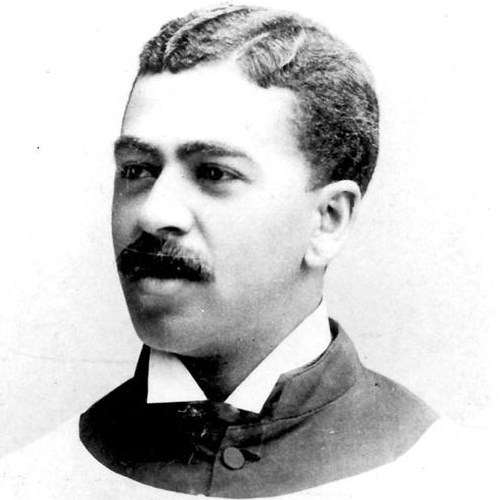
Dvořák was born into a Bohemian family in the Czech Republic in 1841. Although the composer would not encounter African-American music until he began living in the United States about 50 years later, it is thought that his acceptance of music from underrepresented communities stemmed from his own experience “as a Bohemian citizen of the Austro-Hungarian Empire, a member therefore of a linguistically and culturally oppressed minority” (Steinberg 150). Perhaps it was because of his experience as a Bohemian in the Czech Republic that he was drawn to hearing music from African-American and indigenous cultures upon his arrival to New York City in 1892. While serving as the director for the National Conservatory of Music in New York City, Dvořák was introduced to African-American spirituals through then-student H. T. Burleigh, who would often sing them for the composer upon request. The spirituals Burleigh sang led to Dvořák’s public support of African-American music in a famed quote from an 1893 NY Herald interview:
“In the Negro melodies of America I discover all that is needed for a great and noble school of music. They are pathétic, tender, passionate, melancholy, solemn, religious, bold, merry, gay or what you will. It is music that suits itself to any mood or purpose. There is nothing in the whole range of composition that cannot be supplied with themes from this source. The American musician understands these tunes and they move sentiment in him.”
The spirituals Burleigh sang also inspired some of the works Dvořák wrote while in America, most notably his Symphony No. 9 “From the New World.” This video from the Chicago Symphony Orchestra’s Beyond the Score series does a great job of highlighting specific portions of Dvořák’s work that were inspired by two well-known spirituals (Swing Low, Sweet Chariot, Steal Away, and Go Down, Moses) by placing fragmented recordings of the works next to each other. In addition to the musical examples, the video also sheds more light on the relationship between Dvořák and Burleigh.
While some attitudes towards Dvořák’s use of Negro spirituals were negative, such as “a grudging admission that an insignificant scrap or two of black or Indian might lie buried in the work,” his Ninth Symphony was widely regarded as a success, and continued to be one of Dvořák’s most in-demand works at the time (Sullivan 8). Considering Dvořák’s largely successful use of spirituals combined with his public support of African-American musicians and music, one might presuppose that these things helped shift public attitudes about merging African-American music with classical music. However, this did not seem to be the case. Although Dvořák’s encouragement of his African-American students resulted in a new group of composers that incorporated their heritage into classical music (similar to how many European composers used their folk songs in their music), it is clear by the trajectory of many of their careers that their race had some effect on whether or not their music would be met with positive acclaim (in their lifetime).
Despite the fact that Burleigh was the first composer to truly embrace and revive the Negro spiritual in the classical music world, Dvořák’s work with spirituals is much more widely known than Burleigh’s. The same is true for another one of Dvořák’s students, Will Marion Cook. In this audio clip, you can hear a short synopsis of the obstacles Cook faced in the classical music world because of his race, as well as some of his compositions. However, if you look at the careers of his white contemporaries, like George Gershwin for example, you will see that although some of their “genre-bending” works were met with skepticism at first, they were very quickly incorporated into the classical repertoire.
As time went on, there were more composers pushing the boundaries of classical music by using aspects of African-American music. Duke Ellington, a student of Will Marion Cook, was a pioneer of “symphonic jazz” music. While Ellington is considered a legend in the world of jazz music, his symphonic works still remain overlooked in the concert hall. In this video of Ellington in conversation with composer Leonard Bernstein, the two discuss how the merging of genres has in some ways resulted in the merging of their audiences, but perhaps the remaining separation between the two lies in that Ellington writes “symphonic jazz” while Bernstein writes “jazz symphonies.” While those terms suggest that the genre each composer had been trained in is the prominent one (i.e. Ellington wrote jazz that was symphonic, while Bernstein wrote symphonies that were jazzy), both terms are very closely related, yet only Bernstein’s “jazz symphonies” are played frequently, despite the influences and instrumentation being the same as those for Ellington’s “symphonic jazz.”
Looking at how audiences and industry leaders have reacted to the use of African-American music in classic music, it is difficult to say whether or not Dvořák’s early support and advocacy helped move the industry forward on this issue. While Dvořák’s investment in his African-American students surely contributed to the development of diverse classical composers, the industry’s support of African-American music continued to be conditional upon who was using the music. This conditional support is why we remember Dvořák, Gershwin, and Bernstein in different degrees and capacities than we do Burleigh, Cook, and Ellington.
References:
Cruz, Jon. Culture on the Margins: The Black Spiritual and the Rise of American Cultural Interpretation. Princeton University Press, Princeton, N.J, 1999;2001;.
Horowitz, Joseph. Dvořák in America: In Search of the New World. Cricket Books, Chicago, 2003.
Hutchinson, Earl Ofari. It’s Our Music Too: the Black Experience in Classical Music. Middle Passage Press, 2016.
Sikand-Youngs, Nathaniel. “”another Spirit, Other Thoughts, another Colouring”: Performances of Race in Antonín Dvořák’s Symphony no. 9 from the New World.” HJEAS : Hungarian Journal of English and American Studies, vol. 23, no. 2, 2017, pp. 317-329,446,454. ProQuest, https://search-proquest-com.ezp.lib.rochester.edu/docview/2187381928?accountid=13567.
Snyder, Jean E. Harry T. Burleigh: From the Spiritual to the Harlem Renaissance. University of Illinois Press, Springfield, [Illinois];Chicago, [Illinois];Urbana, [Illinois];, 2016, doi:10.5406/j.ctt18j8x96.
Steinberg, Michael. The Symphony: a Listener’s Guide. Library of Congress, NLS/BPH, 2001.
Sullivan, Jack. New World Symphonies: How American Culture Changed European Music. Yale University Press, New Haven, 1999.